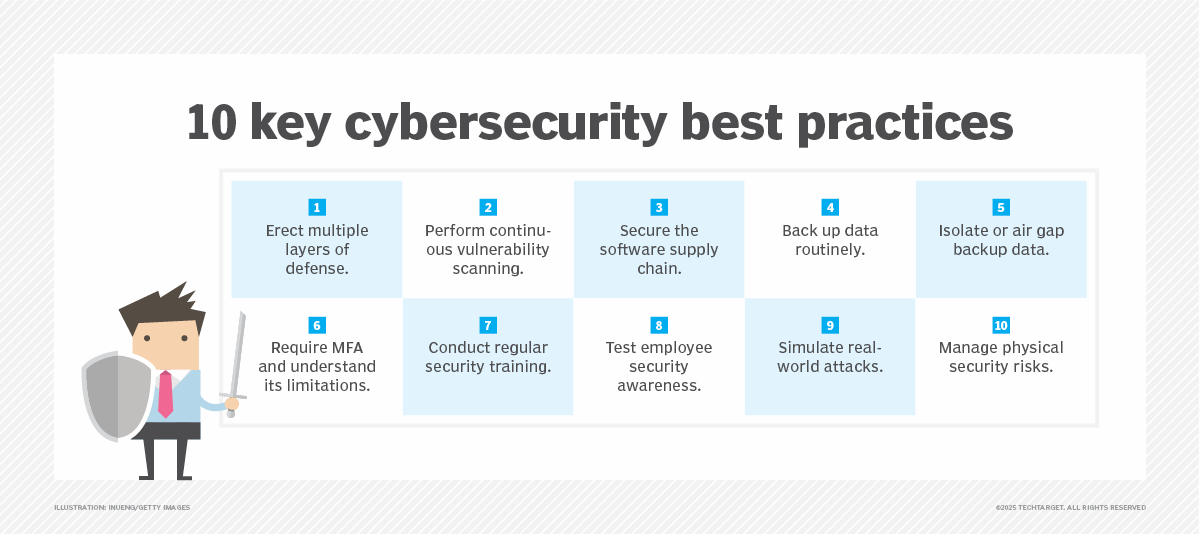
In the current digital landscape, cybersecurity is no longer a concern reserved for IT departments alone—it is a critical component of enterprise risk management. For businesses of all sizes, a single security breach can result in financial devastation, legal liability, and irreparable reputational damage. As threat actors become more sophisticated, adopting a proactive and layered security posture is non-negotiable. This article outlines the foundational cybersecurity practices every organization must implement to safeguard its assets, data, and operational continuity.
1. Establish a Comprehensive Security Policy
A robust cybersecurity framework begins with documented, enforceable policies. Your security policy should define acceptable use of company resources, data classification standards, and incident response protocols. This document serves as the cornerstone for employee behavior and technical controls. Without a clear policy, enforcement becomes arbitrary, and accountability dissolves.
Key elements of an effective policy include:
- Access control rules: Define who can access specific systems, networks, and sensitive data.
- Data retention and disposal guidelines: Specify how long data is kept and the methods for secure destruction.
- Incident reporting structure: Outline the chain of command and mandatory reporting timelines for suspected breaches.
- Remote work security requirements: Mandate VPN usage, endpoint protection, and multi-factor authentication for off-site employees.
To remain effective, this policy must be reviewed and updated at least annually, or following any significant organizational or regulatory change.
2. Enforce Multi-Factor Authentication (MFA) Universally
Passwords alone are insufficient in an era of credential-stuffing attacks and phishing campaigns. Multi-factor authentication adds a critical second layer of defense, requiring users to verify their identity through a combination of something they know (password), something they have (smartphone or hardware token), or something they are (biometrics).
Best practices for MFA implementation:
Statistics consistently show that MFA blocks the majority of automated attacks and significantly reduces the risk of account compromise.
3. Prioritize Endpoint and Network Security
Perimeters have dissolved. Modern businesses operate across laptops, mobile devices, servers, and IoT equipment. Each endpoint is a potential entry point for malware, ransomware, or unauthorized access. Effective endpoint protection goes beyond traditional antivirus software.
Endpoint Detection and Response (EDR)
Deploy EDR solutions that provide continuous monitoring, behavioral analysis, and automated response to suspicious activities. Unlike signature-based tools, EDR identifies zero-day exploits by analyzing patterns and anomalies. Ensure that all endpoints receive timely updates and patches for operating systems, browsers, and third-party applications.
Network Segmentation and Firewalls
Segregate your network into distinct zones (e.g., finance, HR, research) with strict firewall rules controlling east-west traffic. This containment strategy ensures that if a single segment is breached, attackers cannot laterally move to critical systems. Regularly audit firewall rules and disable any ports or services that are not explicitly required.
4. Conduct Regular Security Awareness Training
Human error remains the leading cause of security incidents. Phishing, social engineering, and pretexting exploit trust and inattention. Your employees are either your first line of defense or your weakest link. Therefore, mandatory, recurring training is essential—not just an annual compliance checkbox.
Effective training programs should include:
- Simulated phishing campaigns: Test employees periodically by sending benign mock attacks and provide immediate feedback on mistakes.
- Real-world case studies: Illustrate recent breaches and their business impact to drive home the stakes.
- Clear reporting procedures: Instruct staff on how to report suspicious emails or activities without fear of reprisal.
- Role-specific modules: Tailor training for executives (who face spear-phishing) versus entry-level staff.
Reinforce training with a culture of security, where cautious behavior is rewarded and incidents are viewed as learning opportunities.
5. Implement a Rigorous Patch Management and Vulnerability Assessment Program
Unpatched software vulnerabilities are the most commonly exploited attack vectors. Adversaries actively scan the internet for known CVEs (Common Vulnerabilities and Exposures) and automate attacks against outdated systems. A disciplined patch management process reduces your attack surface dramatically.
Your vulnerability management lifecycle should include:
Additionally, subscribe to vendor security advisories and threat intelligence feeds to stay ahead of emerging exploits.
6. Backup Data and Test Recovery Procedures
Ransomware attacks often succeed because victims are unable to restore operations without paying the extortion demand. The only reliable mitigation is a robust backup strategy. However, having backups is not enough—they must be secure, isolated, and regularly tested.
Adhere to the 3-2-1 rule: keep three copies of data (production plus two backups) on two different media types, with one copy stored off-site or in immutable cloud storage. For immutable backups, use solutions that prevent modification or deletion even by administrators, ensuring ransomware cannot encrypt them. Most critically, perform quarterly restoration drills. A backup that cannot be restored is merely a collection of data, not a recovery solution.
7. Develop and Test an Incident Response Plan
Even with the strongest defenses, a breach may occur. Your ability to detect, contain, and eradicate a threat within minutes—not days—determines the extent of damage. An incident response (IR) plan must be documented, rehearsed, and integrated with your business continuity strategy.
A mature IR plan covers:
- Preparation: Define roles, communication channels, and legal counsel involvement.
- Detection and analysis: Establish clear metrics for identifying a security incident
- Containment, eradication, and recovery: Detail step-by-step actions for isolating systems and removing the attacker.
- Post-incident review: Conduct a forensic analysis to extract lessons learned and improve future defenses.
Run tabletop simulations annually with both technical and executive teams to ensure swift, coordinated decision-making under pressure.
8. Manage Third-Party and Supply Chain Risk
Your security posture is only as strong as the weakest vendor in your supply chain. Attackers frequently target smaller vendors to gain access to larger enterprises. Tighten your vendor management framework by performing due diligence before onboarding any partner that touches your data or infrastructure.
Key controls include:
- Requiring third parties to meet minimum security standards, such as SOC 2 Type II or ISO 27001 certification.
- Contractually obligating vendors to immediately notify you of any breach affecting your data.
- Restricting vendor access to the least privilege necessary and revoking access immediately when no longer required.
- Conducting periodic security reviews or penetration tests on critical suppliers.
9. Enable Comprehensive Logging and Monitoring
You cannot defend against what you cannot see. Implement centralized logging across servers, endpoints, cloud platforms, and network devices. Use a Security Information and Event Management (SIEM) system to aggregate and correlate logs for anomalies. Alert your Security Operations team on critical events such as repeated login failures, unusual data exfiltration patterns, or privileged account misuse. Retain logs according to legal requirements and ensure logs are tamper-proof and immutable.
10. Encrypt Data at Rest and in Transit
Encryption ensures that even when data is stolen or intercepted, it remains unreadable. Enforce encryption for all data in transit using TLS 1.2 or higher. For data at rest, employ strong encryption protocols (AES-256 or better) for databases, file storage, and backup media. Also, encrypt email communications containing sensitive information and consider database-level encryption for fields like social security numbers or payment details. Properly manage encryption keys through an enterprise key management system and rotate them according to policy.
Conclusion: A Continuous, Not Static, Commitment
Cybersecurity is not a one-time project; it is an ongoing operational discipline. As your business evolves, so must your defenses. Regularly reassess your risk profile, stay informed about emerging threats, and foster an organizational culture that treats security as a shared responsibility. By implementing these essential practices—from MFA and endpoint protection to rigorous backup testing and vendor oversight—you build a resilient foundation capable of withstanding modern cyber threats. In the end, the cost of prevention is always lower than the cost of a breach.
Leave a Reply