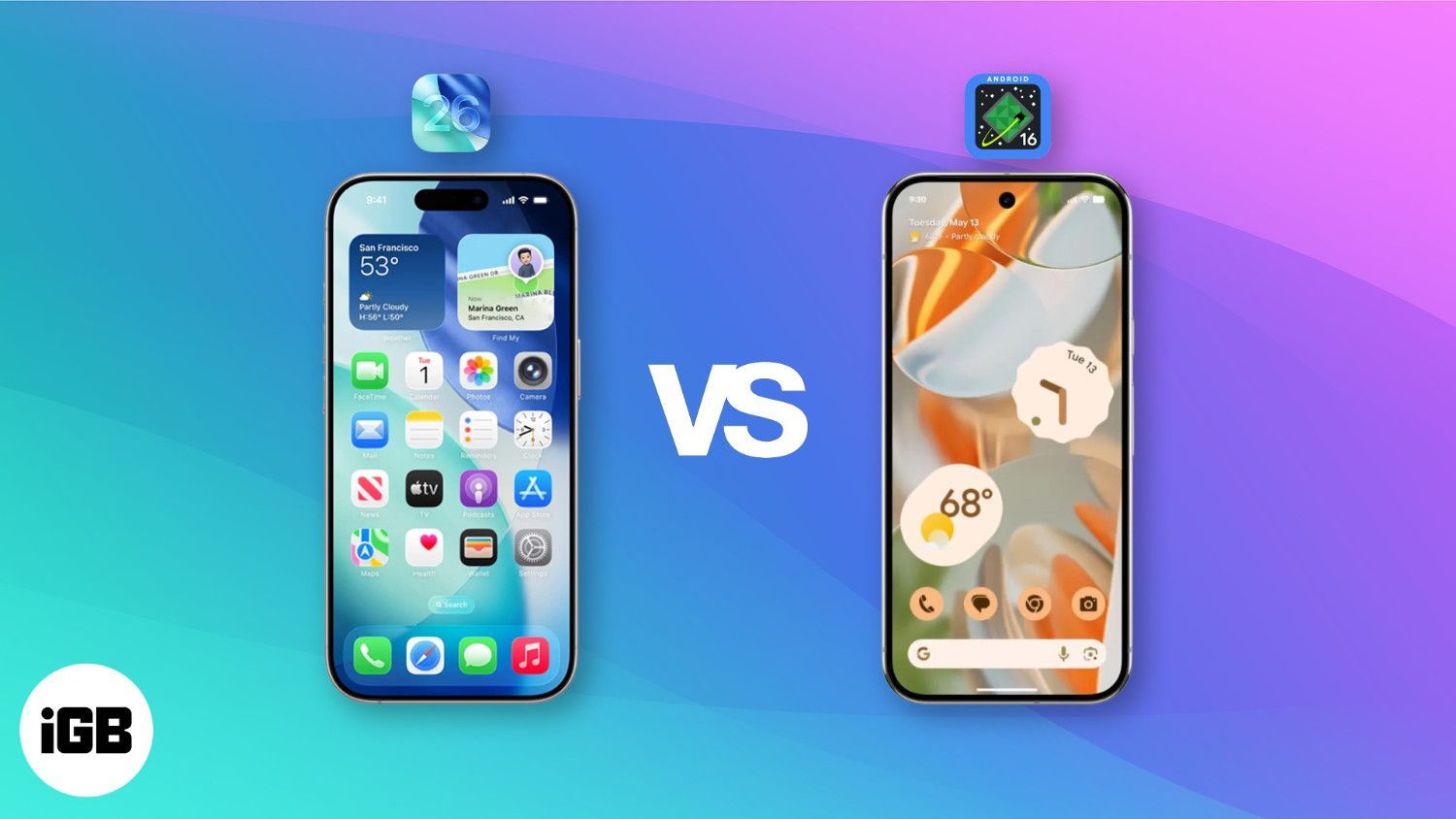
In the modern mobile ecosystem, the choice between Android and iPhone is rarely about mere preference; it is a fundamental architectural decision that impacts user workflow, security posture, and long-term cost efficiency. For professionals, developers, and power users, understanding the nuanced technical differences is paramount. This analysis dissects the two platforms across critical dimensions, providing an objective, data-driven comparison to inform your next hardware investment.
1. Operating System Architecture and Update Lifecycle
The core divergence begins at the kernel level. Apple’s iOS is a closed-source, Unix-based operating system, tightly coupled to proprietary hardware. This vertical integration allows for surgical optimization, resulting in predictable performance and a unified user interface across all devices. Conversely, Android is a Linux-based, open-source platform (AOSP) that is fragmented across manufacturers. While this fosters hardware diversity, it introduces variability in update delivery and system behavior.
Critical divergence in update support:
- iPhone: Apple consistently provides 5–7 years of major iOS updates. For instance, the iPhone 6s received iOS 15, a full six years post-launch. This guarantees prolonged security patches and feature parity across the lineup.
- Android (High-End): Google’s Pixel devices now promise 7 years of OS updates, setting a new benchmark. However, Samsung offers 4–5 years, while many mid-tier OEMs stop at 2–3 years.
- Android (Budget/Enterprise): Often stuck on older Android versions, creating security vulnerabilities that are unacceptable for regulated industries.
2. Performance Under Load: Real-World Benchmarks
Historically, Apple’s custom silicon has dominated raw CPU/GPU metrics. The A17 Pro chip in iPhone 15 Pro series features a 6-core CPU and a 5-core GPU, delivering sustained performance that rivals desktop-class processors. However, recent Android flagships—such as the Snapdragon 8 Gen 3 and MediaTek Dimensity 9300—have closed the gap in peak performance, particularly in multi-core workloads.
Yet, raw numbers do not tell the full story. Android devices often employ aggressive thermal throttling to manage heat dissipation in slim chassis. In sustained render tests or extended gaming sessions, the iPhone maintains a higher performance consistency percentage. For professionals running extended 4K video exports or complex AR models, this thermal stability is a decisive factor.
2.1 Memory Management & Background Tasks
iOS employs an advanced memory compression algorithm and “suspended execution” for background apps, allowing smaller RAM capacities (8GB) to outperform Android devices with 16GB. Android, however, offers true multitasking with resizable windows and desktop mode support, which is more versatile for productivity but less power-efficient. For a technical user, iOS offers fluidity; Android offers parallelism.
3. App Ecosystem and Development Parity
The Apple App Store maintains a rigorous review process that prioritizes privacy and security. While this limits some niche utilities, it significantly reduces malware risk. The Google Play Store, while improved with Play Protect, remains more permissive, leading to a wider array of apps—including powerful sideloading options and F-Droid repositories—but with a higher incidence of malicious software.
Professional Development Considerations:
4. Hardware Design and Build Quality
Apple’s industrial design is unmatched in terms of material tolerance. The use of aerospace-grade aluminum, Ceramic Shield glass, and surgical stainless steel frames results in a rigid, uniform device. Android offers more variety—from foldable glass to titanium and vegan leather—but consistency varies widely across brands. In terms of repairability, the EU’s right-to-repair regulations have pushed both platforms, yet Apple’s self-service repair program remains more cumbersome and costly than the modular architecture of many Android devices (e.g., Fairphone).
5. Photography and Computational Imaging
The iPhone’s photo pipeline relies on heavy computational photography. The Photonic Engine processes 24MP images with zero shutter lag, producing true-to-life colors and deceptively natural skin tones. Android’s approach is more versatile, with periscope zoom lenses (up to 10x optical on Samsung Galaxy S24 Ultra) and variable aperture systems that are physically impossible on iPhones. For videography, Apple leads with ProRes, Log encoding, and Dolby Vision HDR; Android excels with manual controls and bitrate flexibility, though the ProRes codec on iPhone remains the industry standard for content creators.
6. Security, Privacy, and Enterprise Management
From a systemic security standpoint, Apple’s Secure Enclave and certified hardware encryption keys are superior. iOS devices automatically enforce strong passcode policies and fail closed against brute-force attacks. Android’s Titan M2 chip on Pixel provides similar trust, but its efficacy is diluted by OEM skin modifications. For enterprise mobility management (EMM), both platforms support MDM, but macOS/iOS ecosystem integration (via Apple Business Manager) offers frictionless Zero-Touch deployment. Android’s Zero-Touch is robust, yet fragmented vendor portals complicate multi-BYO policy enforcement.
6.1 Data Privacy compared
| Default ad tracking | Opt-out (ATT) | Opt-in (but pre-loaded trackers from Google) |
| Data encryption (at rest) | Hardware AES-256 | File-based encryption (varies by OEM) |
| Private relay/browsing | iCloud Private Relay (integrated) | VPN required (no native equivalent) |
| OS update installation | Automated, immediate | Delayed by carrier & manufacturer |
7. Ecosystem, Connectivity, and long-term Cost
Apple’s ecosystem (Mac, iPad, Watch, AirPods) provides seamless handoff, Universal Clipboard, and AirDrop. This lock-in is powerful but also a financial commitment. Android integrates with Google Workspace, Chrome OS, and Windows natively, offering greater interoperability for mixed corporate environments. In terms of total cost of ownership, iPhones retain 60-70% of their value after 2 years, whereas Android flagships depreciate 40-50% over the same period. However, the initial purchase price of iPhones is typically higher, and repair costs are 30% more expensive on average.
8. Decision Matrix: Which Platform Suits You?
Choose iPhone if:
- Your team requires 5+ years of consistent OS updates.
- You work in creative production with Final Cut Pro or Logic Pro integration.
- Privacy compliance (GDPR, HIPAA) is non-negotiable.
- You value thermal efficiency for sustained CPU/GPU workloads.
Choose Android if:
- You need hardware diversity (foldables, modular batteries, dual-SIM with eSIM).
- Your workflow demands true background multitasking or a desktop mode.
- You require deep system-level customization (ADB, root access, custom kernels).
- Budget constraints are severe, but still require 5G and excellent cameras.
Final Verdict
There is no objectively “better” platform—only the one that aligns with your specific technical requirements. For enterprise uptime and seamless security, iPhone prevails. For open-source flexibility and hardware innovation, Android commands the lead. Professionals should evaluate not just the phone, but the entire ecosystem and maintenance cost over a 3-5 year lifecycle. When in doubt, deploy a dual-platform pilot (Pixel 8 Pro and iPhone 15 Pro) and measure real workload performance in your environment. The data will decide.
Leave a Reply